EV Battery Storage
Enabling Technologies Through Battery Storage
Our EV battery storage solutions save energy, reduce costs, and support smarter, more efficient electric vehicle charging infrastructure when its needed.
EV Battery Storage
By 2030, it is predicted that there will be 300,000 public EV charge points in the UK and an even higher number of domestic, workplace and depot chargers. Battery storage systems can play a vital role in managing the peaks in EV charging demand. Many commercial premises do not have the capacity required for EV charging. A new or upgraded DNO supply may not be available or be prohibitively expensive. Battery Storage offers a guaranteed supply for EV charging and can support high-power charging on sites that do not have the capacity required.
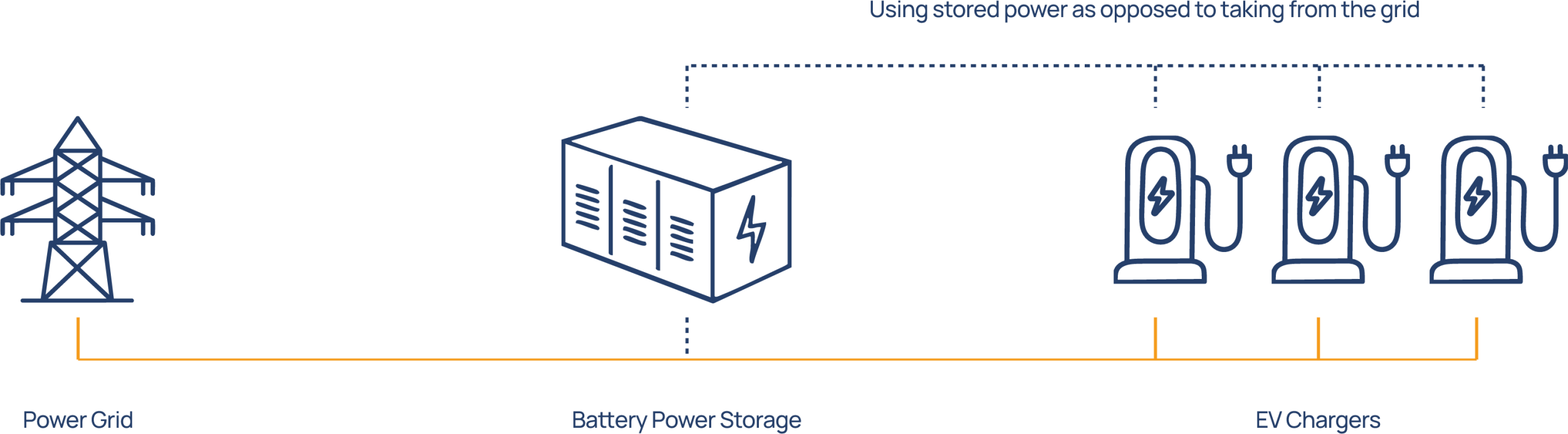
Energy Storage System
When a site’s electrical supply is constrained and cannot deliver the peak EV charging power required at certain times of the day, a battery energy storage system can act as a power ‘reservoir’ to supplement the mains supply. This avoids penalties due to breaches in a site’s electrical supply and connection conditions, and is especially useful for depot charging which can experience significant peaks in demand.
ElectrAssure is able to include battery storage technologies from a number of suppliers and partners in our integrated EV charging solutions.





News & Articles
What Megawatt Charging is and why it matters for HGV depot planning
The Megawatt Charging System (MCS) has been in development since 2018, but it remained a work in progress until early 2026, when the industry body behind it published the first formal technical standard for MCS. This sets out how the...
Read MoreIs the UK’s Charging Network Keeping Up With Demand? New Data Says Yes
One question comes up regularly when we’re talking to businesses about EV infrastructure investment: “is the public charging network actually reliable enough to support a serious transition?” It’s a fair concern, and new research gives a fairly direct answer. Zapmap...
Read MoreFleet EV Growth Hits New Highs As Almost One in Three New Cars Fully Electric (2026 statistics)
The latest registration numbers from the Society of Motor Manufacturers and Traders (SMMT) confirm that EV uptake is picking up speed, with fleet adoption driving much of the surge. The headline stats June 2026 has been a strong month for...
Read More